WFS: A Simple Shared File System for a Distributed Environment
WFS: A Simple Shared File System for a Distributed Environment
Daniel Swinehart, Gene McDaniel, and David Boggs, in Proceedings of the Seventh ACM Symposium on Operating Systems Principles, pp. 9-17, 1979, ACM.
This file system was developed at Xerox's Palo Alto Research Center (PARC), which produced a string of amazing advances in the nascent computer technology area in the 1970s.
Woodstock was "an early office system prototype". The authors' description of Woodstock sound much like early word processing systems, such as those pioneered by Wang Laboratories in the same time frame. The ability to share data between these systems turns out to be surprisingly important. Local storage space was used to track the current work, but then centralized storage provides an efficient way to store them and make the work available to others.
 This is the environment that gave rise to WFS. Because Woostock already existed and provided its own hierarchical document directory structure, WFS did not need to provide such a mechanism. In fact, WFS only provided four classes of operations:
 There are a number of simplifying options with WFS:
 Figure 3 describes the layout of the (stateless) data exchange format used by WFS.
Figure 4 shows the layout of the file directory table which is a contiguous and fixed-size region on disk at a known disk location. This is a fairly common characteristic of on-disk file system formats, having a known location where meta-data is to be found.
Note that Figure 4 also shows how the file's allocated storage is described via direct and indirect block references organized into a tree structure. Again, this will be a recurring model that occurs in file systems; it combines the flexibility of supporting efficient space utilization, ability to describe variable sized files, and efficient utilization of block-addressable storage.
This simple mechanism permits their clients to utilize a flexible storage mechanism without forcing the file server to support any of the mechanisms the client already provides, such as the hierarchical document name space, management of documents and their structure, etc. This separation of concerns yields an elegant and simple implementation model for their file server.
Figure 3 describes the layout of the (stateless) data exchange format used by WFS.
Figure 4 shows the layout of the file directory table which is a contiguous and fixed-size region on disk at a known disk location. This is a fairly common characteristic of on-disk file system formats, having a known location where meta-data is to be found.
Note that Figure 4 also shows how the file's allocated storage is described via direct and indirect block references organized into a tree structure. Again, this will be a recurring model that occurs in file systems; it combines the flexibility of supporting efficient space utilization, ability to describe variable sized files, and efficient utilization of block-addressable storage.
This simple mechanism permits their clients to utilize a flexible storage mechanism without forcing the file server to support any of the mechanisms the client already provides, such as the hierarchical document name space, management of documents and their structure, etc. This separation of concerns yields an elegant and simple implementation model for their file server.
 There are some interesting implementation details described in the paper:
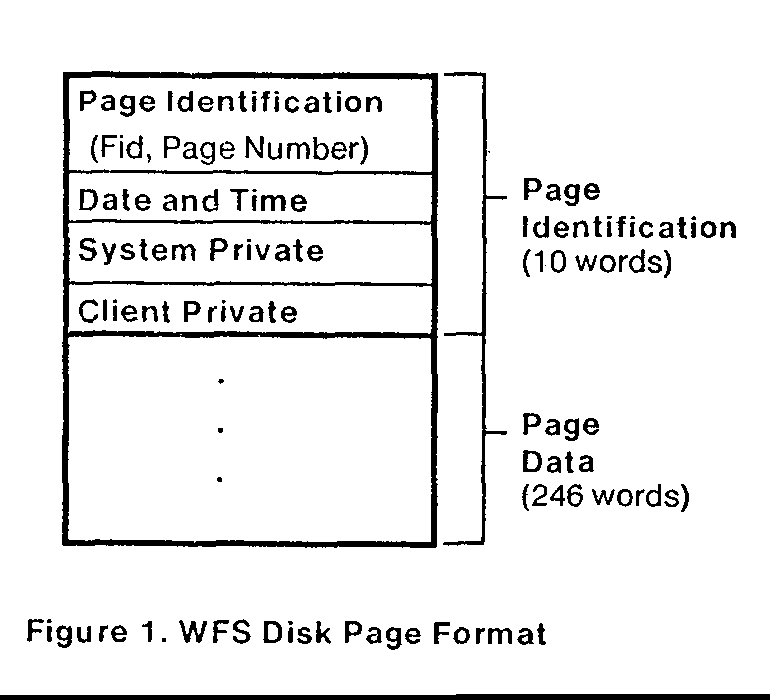 This is the environment that gave rise to WFS. Because Woostock already existed and provided its own hierarchical document directory structure, WFS did not need to provide such a mechanism. In fact, WFS only provided four classes of operations:
- I/O operations to read and write blocks of data within files
- Creating/Destroying resources: file identifiers (FIDs) and storage blocks (pages)
- Managing file properties, including page allocation data
- Providing maintenance functions
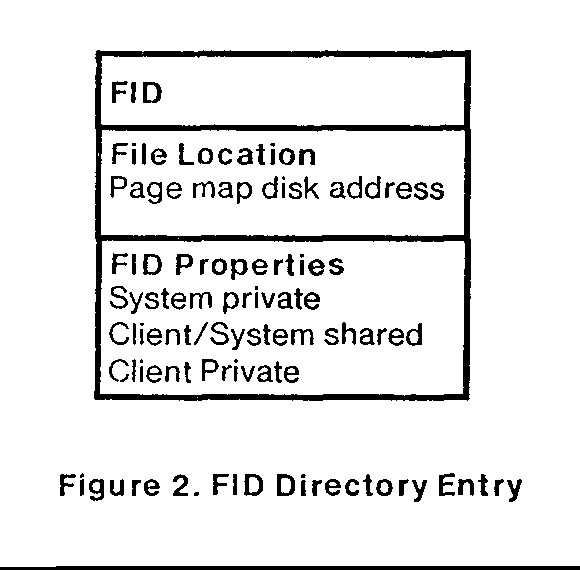 There are a number of simplifying options with WFS:
- The namespace for files is flat; there is no hierarchical structure.
- The file structure is simple (Figure 2).
- The protocol is stateless and each operation is idempotent. This simplifies error handling since a lost message can be re-transmitted safely, with no fear that repeating it will cause problems.
- Operations are client initiated. The server never initiates an operation.
- Clients have limited mutable state. The server does not permit changing its own state directly from the client.
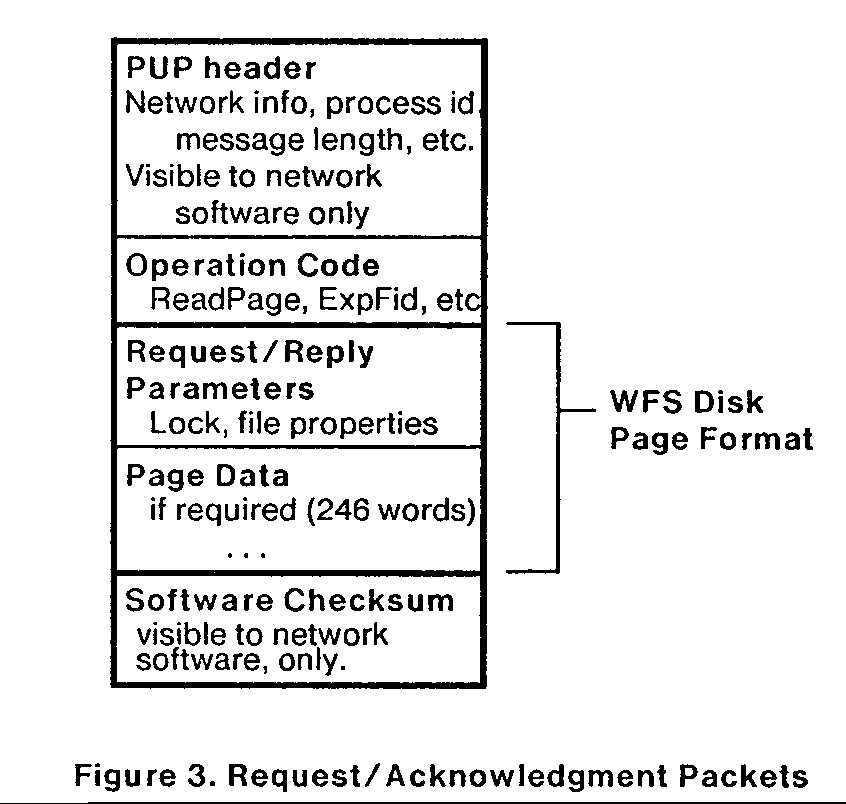 Figure 3 describes the layout of the (stateless) data exchange format used by WFS.
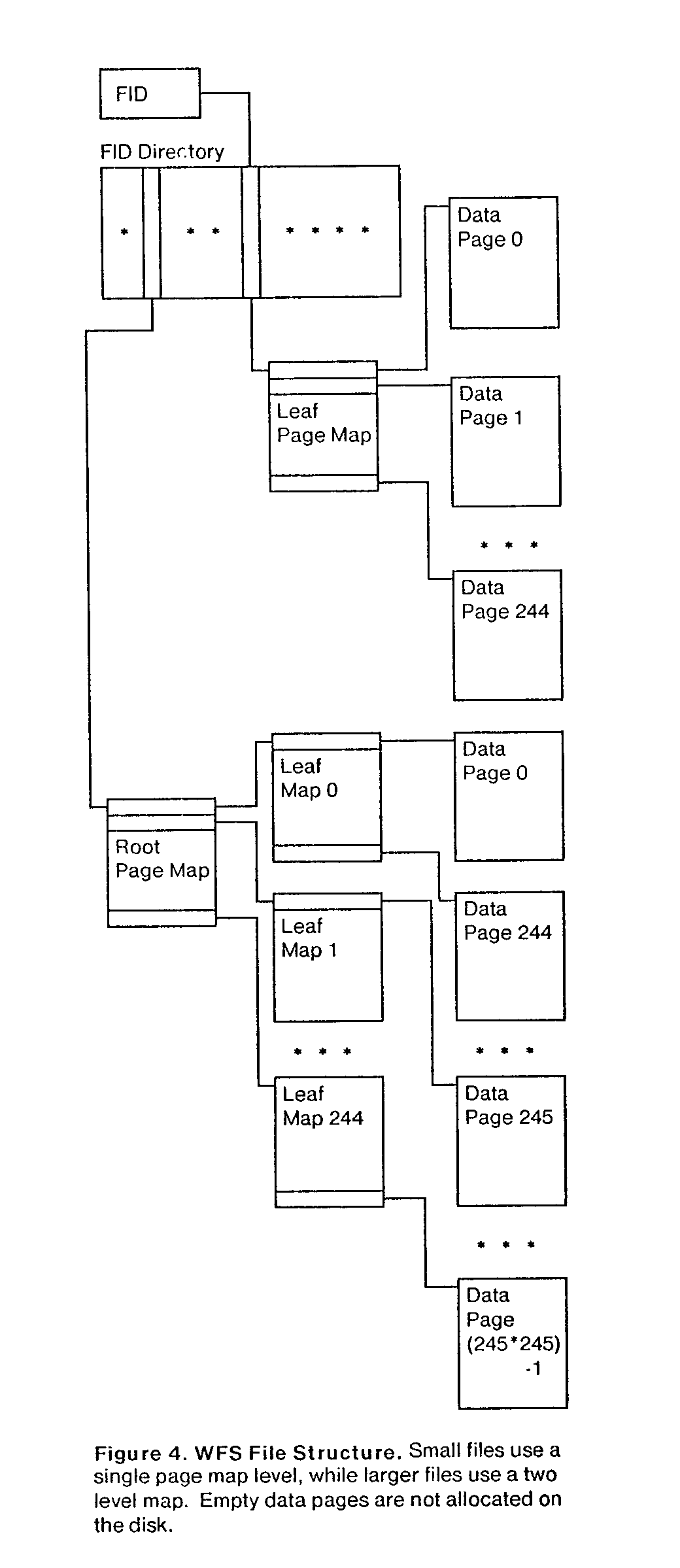
Figure 4 shows the layout of the file directory table which is a contiguous and fixed-size region on disk at a known disk location. This is a fairly common characteristic of on-disk file system formats, having a known location where meta-data is to be found.
Note that Figure 4 also shows how the file's allocated storage is described via direct and indirect block references organized into a tree structure. Again, this will be a recurring model that occurs in file systems; it combines the flexibility of supporting efficient space utilization, ability to describe variable sized files, and efficient utilization of block-addressable storage.
This simple mechanism permits their clients to utilize a flexible storage mechanism without forcing the file server to support any of the mechanisms the client already provides, such as the hierarchical document name space, management of documents and their structure, etc. This separation of concerns yields an elegant and simple implementation model for their file server.
Figure 3 describes the layout of the (stateless) data exchange format used by WFS.
Figure 4 shows the layout of the file directory table which is a contiguous and fixed-size region on disk at a known disk location. This is a fairly common characteristic of on-disk file system formats, having a known location where meta-data is to be found.
Note that Figure 4 also shows how the file's allocated storage is described via direct and indirect block references organized into a tree structure. Again, this will be a recurring model that occurs in file systems; it combines the flexibility of supporting efficient space utilization, ability to describe variable sized files, and efficient utilization of block-addressable storage.
This simple mechanism permits their clients to utilize a flexible storage mechanism without forcing the file server to support any of the mechanisms the client already provides, such as the hierarchical document name space, management of documents and their structure, etc. This separation of concerns yields an elegant and simple implementation model for their file server.
 There are some interesting implementation details described in the paper:
- Write operations are validated by reading the data page. Thus, writes become compare and swap operations that prevents concurrent access from inadvertently overwriting changes made by another client. It would be rather inefficient to rely upon this mechanism, but it helps prevent out-of-order packet processing in an unreliable network. The downside to this is they must read the data before they can write it.
- They use a write-through cache. Thus, the cache is really for read efficiency, not write efficiency. This should help mitigate the write inefficiency.
- Most of their caching is done against meta-data pages ("auxiliary disk pages") because they are more frequently accessed than client data pages.
- Client initiated operations can only access one data page and "a few" auxiliary disk pages.
- Operations are persistent before WFS returns status to the client.
- WFS commands are a single internet packet.
- The WFS protocol is stateless.